ASF-Resistant Pig Breeds: CRISPR and Genetic Progress 2026

  23/05/2026

The Search for ASF-Resistant Pig Breeds: CRISPR Research, Genetic Selection, and Realistic Progress Toward 2026

African swine fever (ASF) has become one of the most persistent threats to the global pig industry since its major outbreaks in Asia during 2018–2019. ASF causes high mortality, spreads quickly, and creates major losses for both industrial farms and smallholder pig producers.

Existing ASF vaccines are an important step forward, especially for countries facing long-term disease pressure such as Vietnam. However, vaccines cannot completely replace biosecurity, epidemiological surveillance, transport control, and herd management. For this reason, the international scientific community is also studying long-term approaches such as CRISPR gene editing and genetic selection to develop pig populations that may have better tolerance to ASF in the future.

How African Swine Fever Has Affected Pig Farming in Vietnam

Characteristics of ASFV and why protective immunity is difficult to achieve

African swine fever virus (ASFV) belongs to the Asfarviridae family. It is a double-stranded DNA virus with a complex structure and a large genome. ASFV can attack important immune cells, including macrophages, and has multiple mechanisms to evade the host’s immune response.

What makes ASFV especially difficult to control is that protective immunity against this virus is highly complex. An antibody response alone is often not enough to provide strong protection, unlike many other viral diseases. This is one of the reasons why developing a safe, effective, and stable ASF vaccine at scale has been challenging for a long time.

Domestic pigs are highly susceptible to ASFV and do not have a clearly defined natural tolerance mechanism like some African wild pig species. Some species, such as warthogs and bushpigs, can become infected with or carry ASFV without showing severe disease, while soft ticks of the genus Ornithodoros act as natural vectors in the transmission cycle in some regions. This difference has drawn scientific interest in the genetic basis of natural ASF tolerance.

Economic losses since 2019 and why vaccines alone are not enough to fully control ASF

In Vietnam, the first ASF outbreak in February 2019 spread to all 63 provinces and cities within a short period of time. Millions of pigs had to be culled, the national pig herd dropped sharply, and pork prices rose significantly during 2019–2020.

Although the pig herd gradually recovered afterward, ASF has continued to recur in cycles in many localities. This shows that ASF is not a short-term risk, but a long-term challenge for the pig industry.

Vietnam has licensed domestic ASF vaccines such as NAVET-ASFVAC, AVAC ASF LIVE, and Dacovac-ASF2. This is an important step forward, but vaccines remain only one part of an overall strategy. Real-world effectiveness still depends on the target animals, circulating virus strains, storage conditions, application procedures, vaccine coverage, and how well biosecurity is maintained on farms.

For this reason, research into pig breeds with better ASF tolerance still has long-term strategic value. However, this field remains at the research stage and is not yet an available solution for farmers today.

Are there any ASF-resistant pig breeds in Vietnam today?

The direct answer is: there is currently no commercial ASF-resistant pig breed available for pig farmers in Vietnam during the 2025–2026 period.

Globally, research into pigs with improved ASF tolerance is still mainly at the foundational research stage, pre-commercial testing stage, or controlled laboratory trial stage. At present, there is no publicly confirmed information showing that any gene-edited pig line or genetically selected pig breed has been widely approved for commercial use with the goal of ASF resistance.

In Vietnam, publicly available information on large-scale research programs for ASF-resistant pig breeds remains limited. No ASF-resistant pig breed has been announced as ready for commercial production. Therefore, farmers should view this as a long-term solution, not a short-term way out of current disease outbreaks.

How does CRISPR technology work in developing ASF-resistant pigs?

Veterinarians are testing different pig samples

Step-by-step CRISPR gene-editing process in research on ASF-resistant pigs

CRISPR-Cas9 is a gene-editing tool that allows scientists to make changes at a specific location in the genome. In research on pigs with improved ASF tolerance, CRISPR can be used to edit certain genes or sequence regions believed to be related to how the virus enters cells, replicates, or triggers inflammatory responses.

The research process usually includes the following main steps:

Step 1 – Identify the target gene

Scientists analyze the genomes and immune responses of domestic pigs, African wild pigs, and experimental models to find genes or sequence regions that may be related to ASFV tolerance. One target that has attracted attention is RELA, a gene related to the NF-κB transcription factor and inflammatory response.

Step 2 – Design the guide RNA

The guide RNA is designed to direct the CRISPR-Cas9 system to the location that needs to be edited in the genome. The accuracy of this step directly affects editing efficiency and the risk of off-target effects.

Step 3 – Edit cells or embryos

Depending on the research strategy, scientists may edit cells, embryos, or specific locations in the genome. Not every CRISPR approach means “taking genes from wild pigs and putting them into domestic pigs.†In many cases, editing may simply involve changing a few nucleotides, replacing a gene variant, or inactivating a gene or receptor related to the viral life cycle.

Step 4 – Create pigs carrying the genetic change

Depending on the technical platform, edited cells or embryos can be used to create pigs carrying the genetic change. These pigs then need to be monitored for health, reproductive performance, genetic stability, and possible off-target effects over multiple generations.

Step 5 – Conduct controlled ASFV challenge trials

Gene-edited pigs can only be evaluated for ASF tolerance through controlled challenge trials under strict biosecurity conditions. This is a highly complex and costly step that cannot be expanded freely because it involves a dangerous virus.

The RELA gene and international research results so far

RELA is one of the early targets studied in the search for ASF tolerance mechanisms in pigs. Scientists have tested editing domestic pigs to carry certain RELA motifs similar to those found in warthogs, with the expectation of partly mimicking the ASFV tolerance mechanism seen in African wild pig species.

However, published results show that RELA editing alone is not enough to create full ASF tolerance. Some animals may have shown delayed clinical signs or lower viral DNA loads in certain samples, but these results do not prove that the pigs had complete ASF resistance.

This suggests that ASF tolerance is likely a complex trait involving multiple genes, immune responses, and interactions between the virus and the host. Therefore, RELA is valuable as a foundational research direction, but it should not be presented as evidence that CRISPR-based ASF-resistant pigs are close to completion.

In addition to RELA, some research groups are studying other genes and mechanisms related to ASFV entry, replication, and immune evasion. However, so far, no target gene has been publicly confirmed as sufficient to create a commercial ASF-resistant pig breed.

Genetic selection for developing ASF-resistant pig breeds

nữ nhà khoa há»c mặc áo khoác phòng thí nghiệm và Ä‘eo kính bảo há»™ nghiên cứu dữ liệu di truyá»n, cầm ống nghiệm vá»›i chất lá»ng màu xanh lam - xác định gene hình ảnh sẵn có, bức ảnh & hình ảnh trả phí bản quyá»n má»™t lần

Marker-assisted selection and genomic selection in breeding ASF-resistant pigs

Unlike CRISPR, which directly intervenes in the genome, genetic selection is based on identifying and propagating animals that carry genetic characteristics linked to better disease tolerance within a natural population.

Marker-assisted selection (MAS) uses molecular markers in the genome to identify animals carrying beneficial alleles. This method can be faster than traditional selection based only on observable traits, but it requires markers that are truly linked to ASF tolerance. This has not been firmly confirmed because ASF disease mechanisms are complex and real-world exposure data is difficult to collect.

Genomic selection uses whole-genome data combined with phenotype data from large populations to build models that predict breeding value. The advantage of genomic selection is that it does not require researchers to know exactly which single gene controls the trait. A statistical model can learn from genome-wide data. The drawback is that it requires a large reference population, clear phenotype data, and a reliable disease recording system.

For ASF, building a reference population is very difficult because controlled challenge trials cannot be conducted at large scale. This is why genetic selection for ASF resistance is still at the foundational stage.

Advantages of genetic selection over CRISPR in real-world conditions

Genetic selection has one important practical advantage: it does not create genetically modified organisms in the way many consumers commonly understand the term. As a result, legal and social barriers are usually lower than for gene-edited animals.

In addition, products from a genetic selection program can be integrated into existing breeding systems and do not necessarily require specialized infrastructure like gene-editing technology. This is why genomic selection is considered a direction that may be closer to commercialization, although its ability to create strong disease resistance may be less clear than a successful gene edit.

However, even genetic selection cannot deliver quick results for ASF. Without large enough population data and clearly defined resistance indicators, incorporating ASF tolerance into breeding programs will still take many years.

Comparison of CRISPR and genetic selection for ASF-resistant pig breeds

Criteria CRISPR gene editing Genetic selection
Approach Directly edits one or more locations in the genome Selects and propagates animals with desired genetic characteristics
Development timeline Can be fast at the laboratory stage, but slow during approval and commercialization Slower because progress accumulates over many generations, but easier to integrate into breeding programs
Research cost Very high, requiring laboratories, biosecurity, and multi-generation trials Medium to high, requiring genomic data and large population management
Potential level of tolerance Can be high if the right gene and disease mechanism are identified Medium to high, depending on genetic diversity and selection model accuracy
Regulatory barriers High, because it involves gene-edited animals for food production Lower, because it does not directly create gene-edited products
Applicability in Vietnam Limited in the near future due to legal, infrastructure, and market acceptance requirements More feasible if breeding programs, data, and long-term evaluation systems are available
Genetic stability Requires monitoring of off-target effects and stability over many generations Can be stabilized through selection and traditional breeding
Social acceptance May raise concerns among consumers and export markets More easily accepted because it is closer to traditional breeding
Progress toward 2026 No commercial ASF-resistant product yet No complete ASF-resistant breed yet; foundational research is ongoing

Research timeline for ASF-resistant pig breeds from 2019 to 2026

2019 – ASF outbreaks intensified in Asia and accelerated urgent research

ASF spread across many countries and caused major losses to the pig industry. Disease pressure pushed research groups in Europe, the United States, China, and other regions to speed up studies on vaccines, immunology, genetics, and ASF tolerance mechanisms.

2020 – Research on RELA editing in domestic pigs was published

An international research team published results on replacing certain warthog RELA motifs in domestic pigs. The results showed that this edit was not enough to create ASF tolerance, although there were some signals of delayed symptoms in a few animals. This was an important finding because it helped reset expectations: ASF cannot be solved through one simple gene edit.

2021–2023 – The search for related genes and mechanisms expanded

After the RELA results, research shifted toward identifying additional genetic factors related to ASFV entry, replication, and immune evasion. Some studies used genomic data, immunology, and cell models to identify possible intervention points.

2024 – More attention turned to population data and genomic selection

Breeding programs in many countries continued to expand data on genomes, herd health, and reproductive traits. However, directly integrating “ASF resistance†into selection indices remained unclear because reliable and controlled exposure data is needed.

2025 – Legal evaluation and monitoring of progress in gene-edited livestock

Some legal progress has appeared for gene-edited livestock targeting other diseases, such as pig lines developed for tolerance to other diseases. However, this does not mean that ASF-resistant gene-edited pigs have been commercially approved.

2026 – Research remains at the pre-commercial stage

By 2026, ASF-resistant pig breeds should still be viewed as a long-term goal. CRISPR research is likely to remain at the laboratory or pre-commercial stage, while genetic selection still needs larger datasets and many generations of evaluation before it can create a product suitable for broad use.

Practical application of ASF-resistant pig breeds in Vietnamese pig farming

Conditions and farm groups that should prepare for future access to ASF-resistant breeds

While waiting for commercial ASF-resistant breeds, Vietnamese pig farmers at different scales can prepare in more practical ways.

For large-scale farms and industrial livestock companies

This group is the most likely to gain early access if pig breeds with improved ASF tolerance are commercialized in the future. These businesses should closely follow announcements from international research institutes, major breeding companies, and regulatory agencies. At the same time, they need to build strong biosecurity systems, herd data recording systems, traceability, and internal disease management systems.

For medium and small farms

The current priority is not to wait for ASF-resistant breeds, but to practice strict biosecurity, use vaccines according to current guidance, control people and vehicles entering the farm, manage the sources of piglets and breeding stock, and monitor herd health. If domestic breed pilot programs become available, farmers should update information from the Department of Livestock Production & Animal Health, research institutes, and trusted breeding suppliers.

For smallholder pig producers

In the near future, this group does not yet have a clear pathway to access ASF-resistant pig breeds. The most practical priority remains preventing disease spread through barn hygiene, limiting the introduction of animals from unclear sources, avoiding the use of untreated swill, and reporting abnormal signs to local veterinary authorities.

Checklist for evaluating ASF-resistant pig breeds before production use

If pig breeds are announced in the future as resistant to or tolerant of ASF, farmers should not rush to invest based only on advertising. The following criteria should be checked:

  • Are there independent controlled trial results, not only results from the breed developer?
  • What is the specific level of protection or tolerance, and against which ASFV strain?
  • Has the breed been tested under climate conditions and farming systems similar to those in Vietnam?
  • Are production performance indicators such as growth, lean meat rate, and reproduction affected?
  • Is the tolerance stable over multiple generations?
  • Has the breed been approved for circulation in Vietnam by the competent authority, such as the Department of Livestock Production & Animal Health?
  • Is the supply of breeding stock continuous and traceable?
  • Is the cost of the breeding stock economically reasonable compared with the expected reduction in ASF risk?
  • Does the supplier provide technical support during use?
  • Is the breed suitable for market demand, traceability requirements, and customer regulations?

Costs, timeline, and risks to consider before adoption

Cost

If commercial ASF-tolerant pig breeds become available in the future, their breeding stock cost will likely be higher than conventional breeds. However, the specific price difference cannot yet be predicted because no commercial product is available. Farmers will need to compare the cost of breeding stock with ASF-related losses, biosecurity costs, vaccine costs, and the ability to maintain productivity under disease pressure.

Timeline

There is no realistic scenario showing that ASF-resistant pig breeds can become widely accessible to farmers in the short term. Even if research succeeds in the laboratory, the process of testing, safety evaluation, regulatory approval, breeding multiplication, and commercial transfer may still take many years.

Risks

Even a breed described as “ASF-resistant†should not be understood as providing 100% protection. In practice, tolerance may depend on the virus strain, exposure dose, herd health, barn conditions, and level of biosecurity. For gene-edited pigs, issues such as off-target effects, genetic stability, animal health, food safety, and market acceptance must continue to be monitored.

FAQ about ASF-resistant pig breeds

Nhóm con heo trong chuồng trại chăn nuôi

Is CRISPR gene editing for ASF-resistant pigs safe for consumers?

This issue must be evaluated for each specific product. Depending on the editing strategy, CRISPR may not introduce foreign genetic material into the genome and may only change certain locations. However, this does not mean that every CRISPR product is automatically safe or approved for commercialization.

A full safety assessment needs to consider many factors, including off-target effects, stability over multiple generations, animal health, the nutritional composition of the meat, biosafety risks, and traceability. So far, no ASF-resistant gene-edited pig has been widely approved for commercial food production.

What stage has genetic selection for ASF-resistant pigs reached by 2026?

As of the 2025–2026 period, genetic selection for ASF tolerance is still mainly at the foundational stage. Important activities include collecting genomic data, identifying related markers, building prediction models, and evaluating health traits in large populations.

No commercial pig population has been widely announced as having successfully integrated an ASF resistance index into a breeding selection program. This is an important research direction, but it has not yet produced a product for broad practical use.

How long will it take for smallholder pig producers in Vietnam to access ASF-resistant pig breeds?

Based on current progress, smallholder pig producers in Vietnam are unlikely to access ASF-resistant pig breeds in the near future. Even in an optimistic scenario, this technology may first appear among major breeding companies or industrial farms in countries with more advanced research and regulatory infrastructure.

For smallholder producers, the practical strategy today remains strengthening biosecurity, using vaccines according to guidance, managing breeding stock sources, and reporting disease promptly.

CRISPR vs. genetic selection: which method is more likely to be commercialized sooner?

CRISPR has the potential to create stronger and more precise genetic changes if the right target gene is identified. However, this method faces regulatory barriers, biosecurity requirements, and market acceptance challenges.

Genetic selection may have a closer path to commercialization because it does not directly create gene-edited animals and can be integrated into existing breeding programs. However, its ability to create strong tolerance may be slower and depends heavily on population data.

In practice, the two approaches may complement each other: genomic selection can help build populations with better overall health and tolerance foundations, while CRISPR can be studied for specialized lines if the genetic mechanism is clearly identified and the legal framework allows it.

In summary

The search for ASF-resistant pig breeds is a long-term scientific journey with major significance for the global pig industry. CRISPR and genetic selection both have potential, but by 2026, there is still no commercial ASF-resistant pig breed ready for Vietnamese farmers.

The key point is to distinguish clearly between laboratory results, pre-commercial research, and products that have been approved for real-world use. Farmers should not expect ASF-resistant breeds to become a short-term solution.

In the meantime, the most practical strategy remains maintaining strict biosecurity, controlling transport and pig sources, monitoring disease, using vaccines according to current guidance, and responding quickly when signs of disease appear.

Stay Updated on ASF Prevention Technologies and Solutions at VIETSTOCK 2026

VIETSTOCK 2026 – Vietnam’s Premier International Feed, Livestock & Meat Industry Show – is expected to bring together more than 300 brands and 13,000 trade visitors from many countries, including vaccine providers, veterinary medicine companies, biosecurity solution providers, and leading regional pig breeding companies. This is an opportunity to:

  • Gain direct access to ASF vaccine providers, veterinary medicine suppliers, and disease prevention solution providers currently active in the Vietnamese market
  • Stay updated on the latest research and technology trends in the pig industry from leading experts and businesses in Vietnam and abroad
  • Meet breeding suppliers and genetics experts to learn about ways to improve pig productivity and herd resilience under Vietnamese farming conditions
  • Connect with regulatory agencies, associations, and businesses across the value chain to gain insights into policy directions and long-term ASF control solutions

Time: October 21–23, 2026

Venue: Saigon Exhibition and Convention Center (SECC), 799 Nguyen Van Linh, Ho Chi Minh City, Vietnam.

Register now to seize opportunities for growth and networking in the livestock industry:

Visitor registration: https://www.vietstock.org/en/online-registration-2/

Event website: https://www.vietstock.org/en/

Contact information:


Share:
×

FanPage

Vietstock Vietnam
Nuôi cá lồng bè: Lợi nhuận cao, ít rá»§i ro, phù hợp vá»›i má»i Ä‘iá»u kiện

Nuôi cá lồng bè: Lợi nhuận cao, ít rá»§i ro, phù hợp vá»›i má»i Ä‘iá»u kiện

  12/07/2024

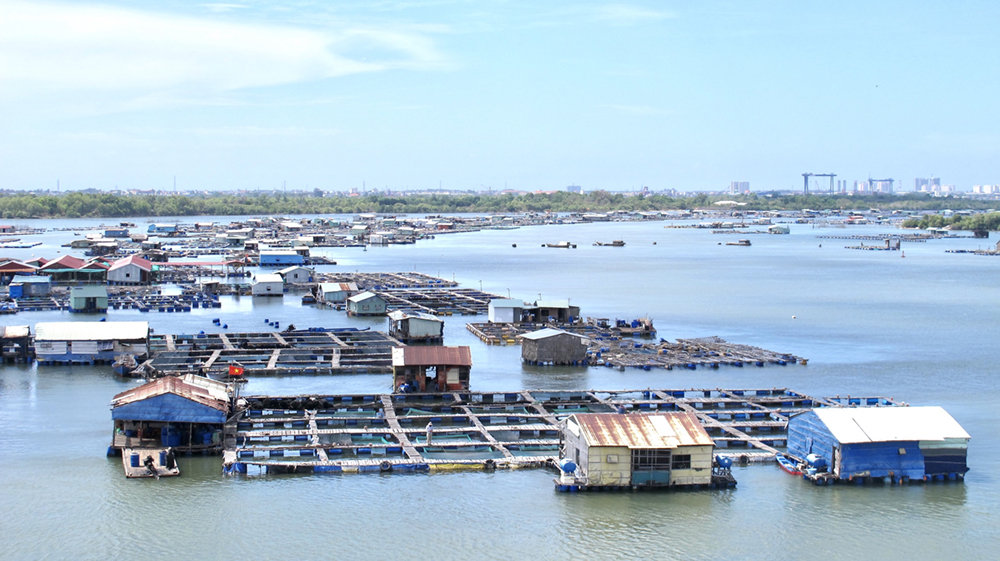
Nuôi cá lồng bè là má»™t hình thức nuôi trồng thá»§y sản ngày càng phổ biến tại Việt Nam, mang lại nguồn thu nhập ổn định cho nhiá»u há»™ gia đình. Mô hình này sở hữu nhiá»u ưu Ä‘iểm nổi bật như tận dụng được diện tích mặt nước, ít chịu ảnh hưởng bởi thiên tai, dịch bệnh, và cho phép sản xuất theo quy mô lá»›n. Tuy nhiên, để thành công trong lÄ©nh vá»±c này, đòi há»i ngưá»i nuôi cần trang bị đầy đủ kiến thức và kỹ thuật chuyên môn. Bài viết này sẽ cung cấp cho bạn hướng dẫn chi tiết vá» cách thức nuôi cá lồng bè, từ khâu chuẩn bị đến thu hoạch, giúp bạn có cái nhìn tổng quan và đầy đủ vá» mô hình này.

nuoi ca long be 2
Mô hình nuôi cá lồng bé mang lại nguồn thu nhập ổn định cho nhiá»u gia đình hiện nay

Vị trí đặt lồng bè

Việc lá»±a chá»n vị trí đặt lồng bè đóng vai trò then chốt trong thành công cá»§a hoạt động nuôi trồng thá»§y sản. Dưới đây là những yếu tố quan trá»ng cần cân nhắc khi lá»±a chá»n vị trí:

  • Lưu lượng nước vào lồng bè cần đảm bảo phải đủ mạnh để cung cấp lượng oxy và loại bá» chất thải và thức ăn thừa, nhưng không quá lá»›n để không gây ảnh hưởng đến sá»± phát triển cá»§a cá. Tốc độ lưu chuyển nước thưá»ng nằm trong khoảng từ 0,2 đến 0,3 mét má»—i giây.
  • Nước ở vị trí lồng bè phải sạch, không bị ô nhiá»…m bởi chất thải công nghiệp, nông nghiệp, sinh hoạt hoặc dầu mỡ. Äá»™ pH, mặn, nhiệt độ, oxy hòa tan và các chỉ tiêu khác phải phù hợp vá»›i yêu cầu cá»§a từng loại cá.
  • Äá»™ sâu cá»§a vùng nuôi cá phải đảm bảo không bị cạn khi thá»§y triá»u xuống. Äá»™ sâu tối thiểu thưá»ng là 3 mét, và đáy lồng bè cách đáy sông hoặc biển ít nhất 0,5 mét. Trưá»ng hợp nuôi trên biển, lồng bè cần đặt xa bá» tối thiểu 200 mét.
  • Vị trí đặt lồng bè cần được bảo vệ tốt, tránh những khu vá»±c có sóng lá»›n, gió mạnh, nguy cÆ¡ sạt lở hay va chạm từ các phương tiện khác. Äối vá»›i vùng biển, nên chá»n các khu vá»±c bên trong vịnh, eo biển hoặc mặt sau cá»§a đảo, nÆ¡i ít bị gió.
  • Vị trí lồng bè cần thuận tiện cho việc vận chuyển con giống, thức ăn, thu hoạch và tiêu thụ sản phẩm. Äồng thá»i, ngưá»i nuôi cần tuân thá»§ các quy định vá» quy hoạch và được phê duyệt bởi cÆ¡ quan chức năng.

Thả giống

Sông là môi trưá»ng sống phù hợp cho Ä‘a dạng chá»§ng loại cá, mang đến cho ngưá»i nuôi nhiá»u lá»±a chá»n. Má»™t số loại cá phổ biến thưá»ng được nuôi lồng bè trên sông bao gồm: cá Ä‘iêu hồng, cá lăng, cá trắm, cá chép, cá bá»—ng,… Má»—i loại cá có đặc Ä‘iểm sinh trưởng, thị hiếu thị trưá»ng riêng, do vậy, cần cân nhắc kỹ trước khi lá»±a chá»n.

Tiêu chí quan trá»ng hàng đầu khi chá»n giống là đảm bảo chất lượng. Cá giống cần khá»e mạnh, không dị hình, dị tật, không xây xát, kích cỡ đồng Ä‘á»u. Nên ưu tiên mua giống tại các cÆ¡ sở sản xuất uy tín, có chứng nhận đảm bảo chất lượng để hạn chế rá»§i ro trong quá trình nuôi.

Theo khuyến cáo, mật độ thả cá nuôi lồng bè trên sông dao động từ 20 – 30 con/m³. Tuy nhiên, đây chỉ là mức tham khảo, ngưá»i nuôi cần linh hoạt Ä‘iá»u chỉnh dá»±a trên Ä‘iá»u kiện cụ thể cá»§a từng vụ nuôi.

Thá»i Ä‘iểm thích hợp để thả cá là sáng sá»›m hoặc chiá»u mát, khi nhiệt độ nước ổn định.

Trước khi thả, cá giống cần được tắm trong nước muối 2 – 3% trong 10 – 15 phút để loại bá» tác nhân gây bệnh như ngoại ký sinh trùng. Sau đó, cần cân bằng môi trưá»ng nước trong lồng và bao chứa cá giống trong 10 – 15 phút để cá thích nghi dần vá»›i môi trưá»ng má»›i. Thả cá từ từ để cá không bị sốc môi trưá»ng.

nuoi ca long be 3
Vị trí đặt lồng bè đóng vai trò quan trá»ng

Chăm sóc và quản lý lồng nuôi

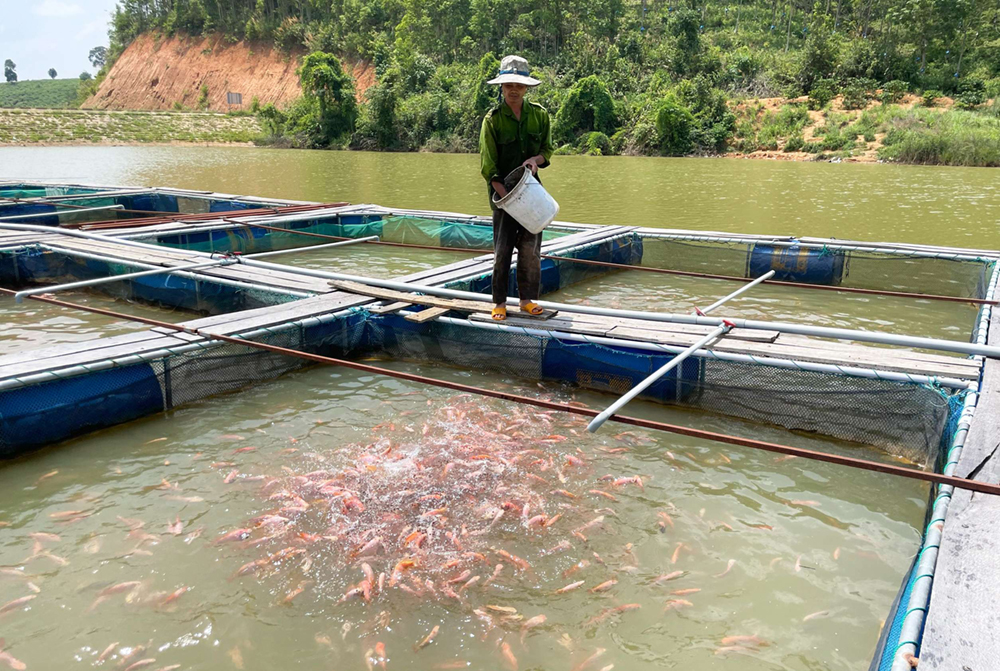
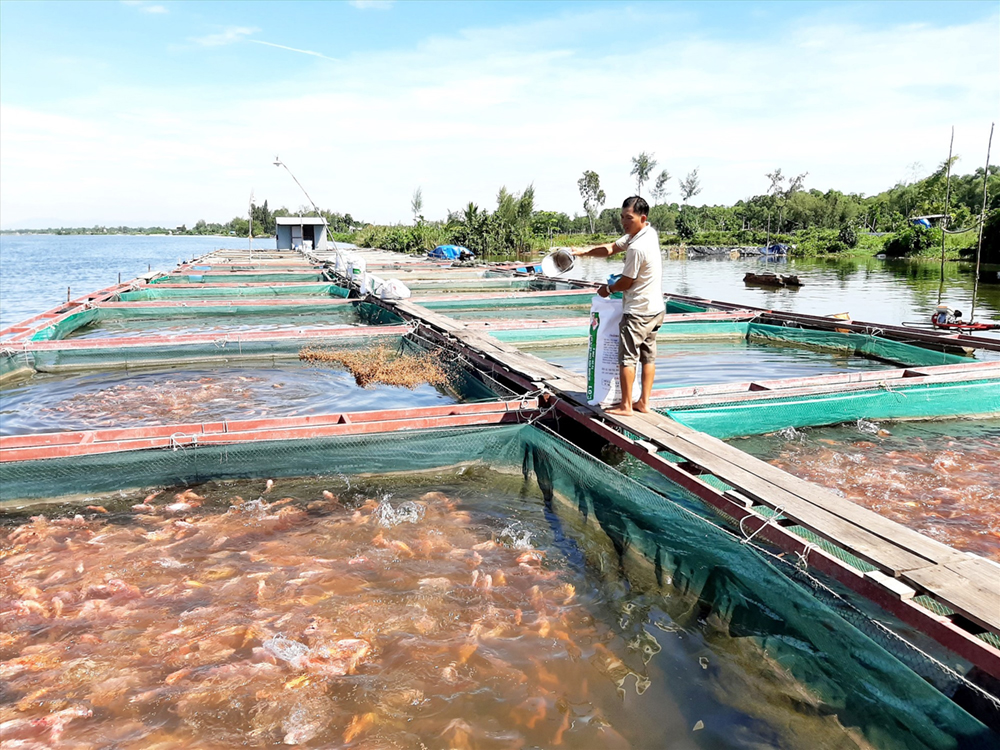
Äể nuôi cá má»™t cách hiệu quả, cần quan tâm đến má»™t số yếu tố quan trá»ng như loại thức ăn, lượng, số lần và thá»i gian cho ăn. 

  • Thức ăn nên được lá»±a chá»n phù hợp vá»›i từng loài cá, đảm bảo hàm lượng protein dao động từ 20-30%, có thể là viên nổi hoặc không tan trong nước, và được bổ sung đầy đủ vitamin và khoáng chất. 
  • Chế độ ăn nên phân bổ khoảng 2-7% trá»ng lượng cÆ¡ thể cá, chia Ä‘á»u trong 2-3 lần má»—i ngày vào buổi sáng và chiá»u để kích thích sá»± phản xạ ăn cá»§a cá. Việc cho ăn cần diá»…n ra từ từ, má»—i lần ít để đảm bảo cá ăn hết và tránh hiện tượng tranh ăn, làm bẩn môi trưá»ng nuôi. 
  • Ngoài ra, nên Ä‘iá»u chỉnh lượng thức ăn theo tình trạng cá, đặc biệt là khi thá»i tiết thay đổi hoặc cá bất thưá»ng trong việc nhận thức thức ăn. 
  • Äịnh kỳ cung cấp thức ăn giàu vitamin C trong 5 ngày liên tiếp, má»—i tháng hai lần, vá»›i liá»u lượng 2g/kg thức ăn, sẽ giúp cá»§ng cố hệ miá»…n dịch cho cá trong quá trình nuôi.

Äể duy trì môi trưá»ng nuôi cá trong lồng bè sạch và khá»e mạnh, các biện pháp vệ sinh định kỳ là cá»±c kỳ quan trá»ng. Cần thá»±c hiện các bước sau để giảm thiểu nguy cÆ¡ ô nhiá»…m nước, lây nhiá»…m bệnh, cải thiện chất lượng sản phẩm và thu nhập:

  • Trước khi thả cá và sau má»—i đợt thu hoạch, hãy đưa lồng bè lên cạn (nếu khả năng cho phép), sau đó sá»­ dụng vôi quét cả trong và ngoài lồng hoặc sá»­ dụng Chlorine 30ppm phun lên lồng. Sau đó, để lồng phÆ¡i khô từ 1 đến 2 ngày để đảm bảo diệt khuẩn, loại bá» các chất hữu cÆ¡ và vô cÆ¡ bám vào lồng, đồng thá»i giảm độ nhá»›t cá»§a nước.
  • Thá»±c hiện vệ sinh lồng ít nhất má»™t lần má»—i tuần trong quá trình nuôi. Sá»­ dụng bàn chải nhá»±a để cá» sạch các cạnh bên trong và bên ngoài lồng lưới, loại bá» rác thải và các vật cứng bám vào cụm lồng nuôi. Äảm bảo vệ sinh lồng trước khi cho cá ăn để tối ưu hóa hấp thu thức ăn cá»§a cá.
  • Nếu sá»­ dụng thức ăn tá»± chế hoặc thức ăn dạng viên chìm, hãy duÌ€ng lưới cước có mắt lưới dày để đảm bảo thức ăn không rÆ¡i xuống đáy sông hoặc hồ. Ngoài ra, hãy vá»›t bá» thức ăn cÅ© trong lồng trước khi cho thức ăn má»›i để tránh lãng phí và ô nhiá»…m nước.
  • Sá»­ dụng vôi nung (CaO) để Ä‘iá»u chỉnh độ pH cá»§a nước, giảm thiểu mầm bệnh. Liá»u lượng khuyên dùng là 5 – 10 kg/100 m3 nước. Trước khi sá»­ dụng, hãy pha loãng vôi nung vá»›i nước và đổ Ä‘á»u vào lồng nuôi.

Vệ sinh lồng bè nuôi cá hiệu quả là má»™t quy trình cần thiết và bắt buá»™c trong hoạt động nuôi trồng thá»§y sản. Việc thá»±c hiện đầy đủ và đúng cách sẽ góp phần đảm bảo môi trưá»ng nuôi trong sạch, cá phát triển khá»e mạnh, nâng cao năng suất và chất lượng sản phẩm, đồng thá»i bảo vệ môi trưá»ng sinh thái.

Nuôi cá lồng bè không chỉ là má»™t phương thức sản xuất hiệu quả mà còn là má»™t “viên ngá»c sáng” tô Ä‘iểm cho bức tranh ngành thá»§y sản Việt Nam. Nét đẹp ấy được thể hiện qua những lợi ích thiết thá»±c: năng suất cao, chất lượng vượt trá»™i, sản phẩm an toàn, thân thiện vá»›i môi trưá»ng và góp phần gia tăng kim ngạch xuất khẩu.

Tuy nhiên, để ngành nuôi cá lồng bè thá»±c sá»± tá»a sáng, cần có sá»± chung tay góp sức cá»§a má»—i cá nhân, doanh nghiệp và cả hệ thống chính sách. Việc áp dụng khoa há»c kỹ thuật tiên tiến, tuân thá»§ nghiêm ngặt các tiêu chuẩn an toàn thá»±c phẩm và xây dá»±ng thương hiệu hiệu quả sẽ là chìa khóa đưa mô hình này phát triển hÆ¡n nữa.

nuoi ca long be 4
Những lưu ý khi triển khai mô hình nuôi cá lồng bè

Má»™t trong những cÆ¡ há»™i để những doanh nghiệp trong lÄ©nh vá»±c thá»§y sản có thể há»c há»i, trao đổi kinh nghiệm và tìm kiếm đối tác là tham gia vào các sá»± kiện chuyên ngành. Trong năm 2024, sẽ diá»…n ra má»™t sá»± kiện quan trá»ng và đáng chú ý đó là Triển lãm Quốc tế Chuyên ngành Thuá»· sản tại Việt Nam – Aquaculture Vietnam 2024. 

Aquaculture Vietnam 2024: Äiểm đêÌn chuyên nghiệp ngaÌ€nh thủy sản Việt Nam

Äây là má»™t triển lãm toàn diện, há»— trợ toàn bá»™ chuá»—i giá trị trong ngành nuôi trồng thá»§y sản và dá»± kiến sẽ thu hút hÆ¡n 100 đơn vị trưng bày và 4.000 khách tham quan trong ba ngày diá»…n ra. Từ ngày 09 đến ngày 11 tháng 10 năm 2024, Trung tâm Há»™i chợ & Triển lãm Sài Gòn, TP.HCM sẽ là địa Ä‘iểm tổ chức triển lãm Aquaculture Vietnam 2024. Äây là sá»± kiện mang đến nhiá»u cÆ¡ há»™i cho ngành nuôi trồng thá»§y sản. 

Tại đây, các đơn vị trưng bày và chuyên gia hàng đầu trong lĩnh vực sẽ có thể kết nối với nhau một cách nhanh chóng và có thể đưa ra những “quyết định cuối cùng†ngay tại chỗ.

Ngoài ra, các hội thảo đầu bỠtrước và hội nghị & hội thảo kỹ thuật cũng sẽ diễn ra song song với triển lãm, giúp cập nhật thêm kiến thức, kinh nghiệm và công nghệ mới nhất. 

Triển lãm cÅ©ng há»— trợ việc vận chuyển và hướng dẫn tham quan tá»›i các há»™ chăn nuôi ở các tỉnh thành khác cá»§a Việt Nam và Campuchia. Äây là cách để tăng cưá»ng sá»± tiếp cận cá»§a các há»™ chăn nuôi, và cho há» cÆ¡ há»™i tham gia và trải nghiệm tại sá»± kiện. 

Äừng bá» lỡ cÆ¡ há»™i tuyệt vá»i này để tiếp xúc vá»›i những nhà cung cấp, đối tác, khách hàng tiá»m năng, và nhận được những thông tin má»›i nhất vá» ngành nuôi trồng thá»§y sản. 

Hãy đăng ký ngay hôm nay để không bỠlỡ bất kỳ giá trị nào.

Äăng ký tham quan: https://ers-vn.informa-info.com/vsv24 

Äăng ký trưng bày: https://www.aquafisheriesexpo.com/dat-gian-hang/

————————–

Box thông tin:

Chia sẻ:
×

FanPage

Aquaculture Vietnam